
Inside the Cuban State Motorcade: President Miguel Díaz-Canel and His Mercedes-Benz S-Class

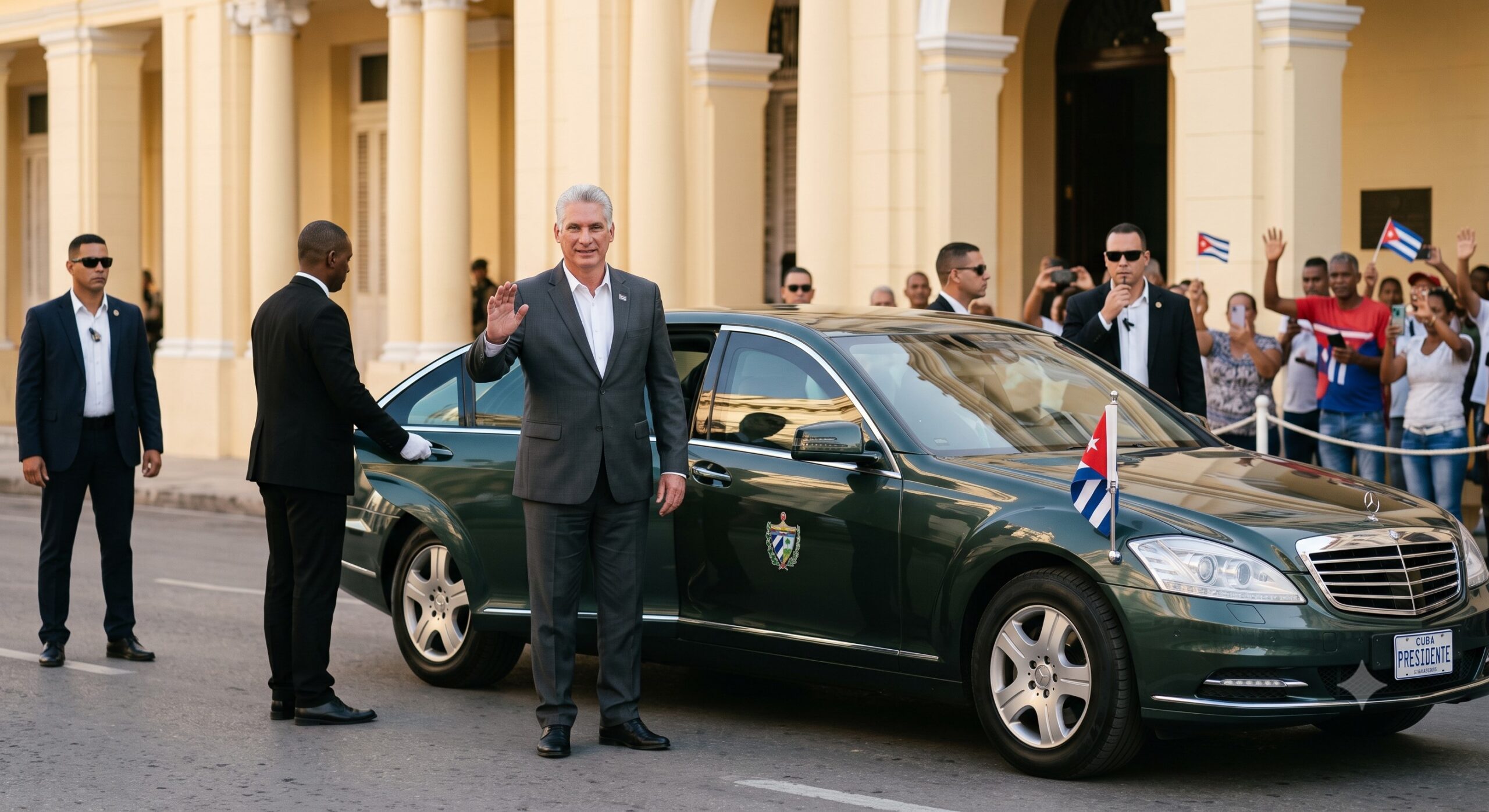
Miguel Díaz-Canel, the President of Cuba and First Secretary of the Communist Party, standing confidently beside his official presidential state car outside a grand neoclassical government structure in Havana. The composition highlights his distinguished stature as he warmly gestures toward observers, framed by attentive security detail and enthusiastic onlookers holding Cuban flags. The scene provides a striking visual narrative that bridges executive authority with public engagement, offering a vivid glimpse into modern Cuban state protocol and national political identity.
In terms of presidential transport and automotive preferences, Cuban leadership has long navigated a unique blend of historical reliance, diplomatic gifts, and practical necessity. While past Cuban leaders like Fidel Castro were famously associated with Soviet-built GAZ and ZiL limousines, contemporary state transportation relies heavily on prestigious European engineering. Official government fleets in Havana prominently feature armored executive sedans from top German manufacturers, notably Mercedes-Benz S-Class models. These vehicles are chosen for their uncompromising safety features, bulletproof armor, and superior comfort during formal state processions and high-profile diplomatic events.
The vehicle showcased in the image reflects the timeless design and commanding presence of a luxury Mercedes-Benz S-Class presidential sedan. Rendered in a deep, distinguished dark green finish, the car features official Cuban presidential insignia on the front door and the national coat of arms flag proudly mounted on the fender. The Mercedes-Benz S-Class represents the pinnacle of automotive craftsmanship, offering advanced protective engineering, high-performance capabilities, and a refined interior designed to function as a mobile command center for heads of state. Its dignified aesthetics perfectly complement the formal visual language of national executive transport.
Miguel Díaz-Canel’s official state vehicles also symbolize a broader balance between functional modernism and traditional diplomatic alliances. While luxury German sedans provide the primary transport for official ceremonies and foreign dignitary receptions, Cuba’s wider official transport strategy relies on strategic trade relations with countries like China and Russia. Over recent years, Cuba has increasingly integrated modern Chinese passenger vehicles and Russian models like the Moskvich into public service and government support fleets. This pragmatic automotive approach underlines the country’s economic focus on durability, maintainability, and resourcefulness amid ongoing international trade dynamics.
Beyond ceremonial executive cars, Cuba’s domestic automotive environment remains defined by a world-famous, vibrant culture of classic American automobiles alongside Soviet-era vehicles. Díaz-Canel’s leadership operates within a society where iconic 1950s American sedans—lovingly maintained by local mechanical ingenuity—share the streets with modern government motorcades. This contrast makes the presidential motorcade stand out even more as a symbol of formal state authority and international diplomacy. The juxtaposition of sophisticated presidential armor against Havana’s historic streetscape highlights Cuba’s unique cultural and historical landscape.
Ultimately, this image serves as an ideal feature illustration for a political or travel blog exploring contemporary Cuban governance, presidential protocol, and state symbolism. The polished appearance of the state car, complete with official flags and security escorts, encapsulates the careful image management involved in modern political representation. Readers interested in executive transport, Latin American politics, or international relations will find the visual and historical background of the Cuban presidential fleet both engaging and informative. By contextualizing the leader and his official vehicle, the photograph provides a compelling focal point for discussing Cuba’s ongoing political and economic narrative.