
Sultan Haitham bin Tariq Al Said and the Mercedes-Benz S-Class: The Essence of Omani Royal Elegance and Statecraft

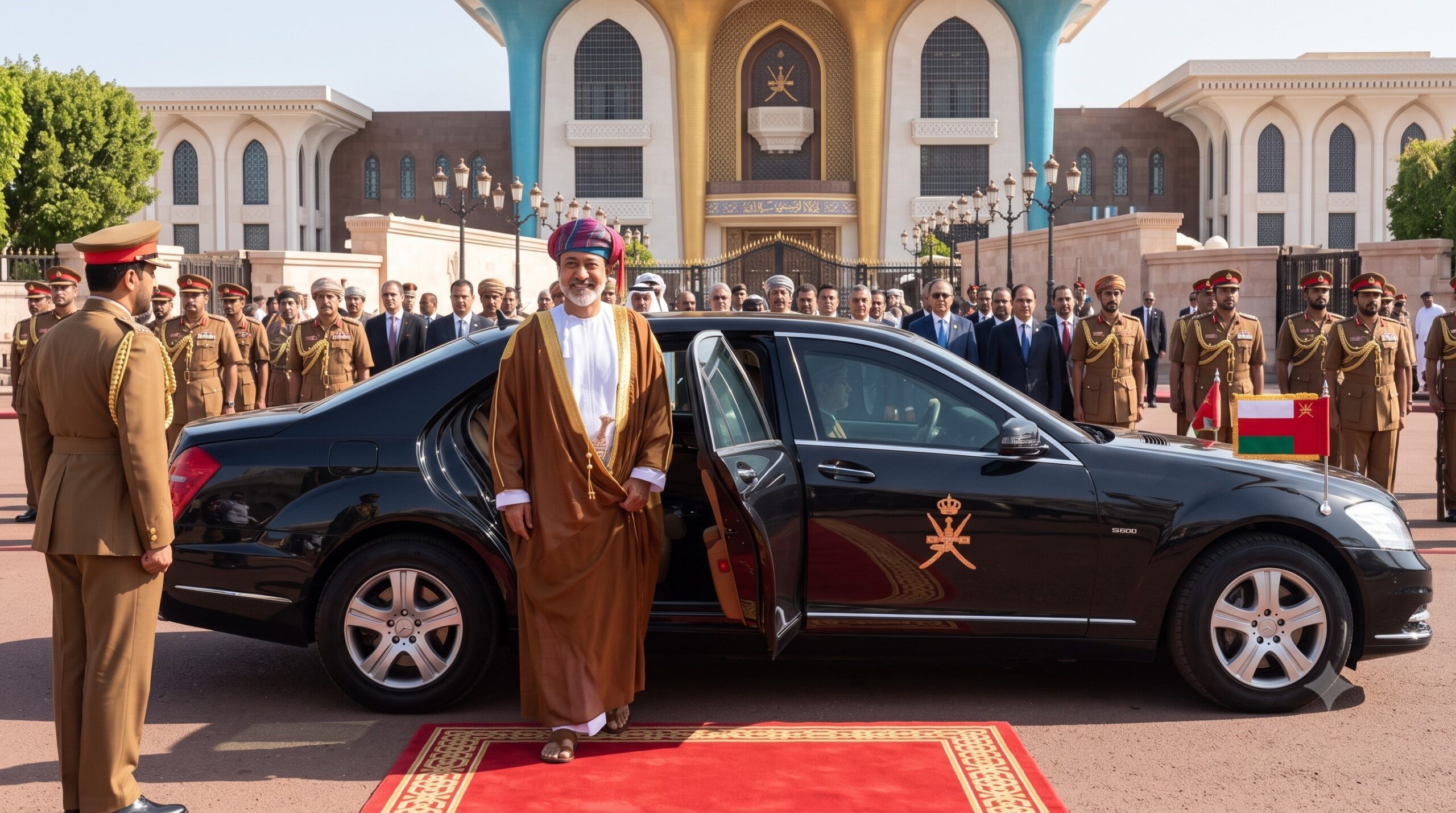
The photograph captures a momentous scene outside the iconic Al Alam Palace in Muscat, where Sultan Haitham bin Tariq Al Said steps out of his state limousine. Framed by ceremonial guards and grand Omani architecture, the monarch radiates calm authority in his traditional bisht and royal turban. Beside him rests the true centerpiece of royal motorcade protocol: an immaculately polished Mercedes-Benz S-Class. The vehicle’s deep black finish reflects the radiant sunlight, creating an interplay of dignified presence and regal poise. Every visual element points to the enduring marriage between Sultanate statecraft and modern luxury. This image serves as a textbook example of high-level Middle Eastern royal diplomacy.
Omani monarchs have maintained a storied automotive tradition, consistently favoring German engineering over louder, more flamboyant displays of wealth. While many Gulf rulers explore diverse bespoke marques, the Sultan of Oman has long turned to Mercedes-Benz for primary official duties. Sultan Haitham continues this deliberate standard, embracing vehicles that prioritize understated gravitas, ballistic security, and structural excellence. Rather than choosing oversized hypercars for state arrivals, he utilizes flagship sedans that communicate governance and steady leadership. This affinity for German design mirrors his overall administrative philosophy—organized, composed, and structurally resilient. The vehicle in the photo represents a continuity of royal protocol perfected across decades.
The car showcased is an armored Mercedes-Benz S-Class limousine, specifically customized for the Royal Court Affairs of Oman. Instantly recognizable by its elongated profile and prominent multi-spoke alloy wheels, the sedan belongs to the storied flagship line that defines executive transport globally. On its front wing stands the national flag of Oman, while the front passenger door bears the gilded Royal Emblem featuring the Khanjar dagger atop crossed swords. These insignia transform a top-tier German automobile into a sovereign vessel of state power. Built to custom specifications, the exterior blends seamlessly into diplomatic motorcades while declaring undisputed authority. It remains one of the most protected and finely finished sedans on the Arabian Peninsula.
Beneath the flawless paintwork lies the pinnacle of the Mercedes-Benz Guard division, known for integrating heavy ballistic protection straight from the factory. State cars of this level feature specialized reinforced steel plates, composite aramid fibers, and multi-layered bullet-resistant polycarbonate glass. Despite carrying tons of protective materials, the vehicle maintains the smooth silhouette of a production S-Class or Maybach variant. The chassis and braking system are extensively rebuilt to handle the immense curb weight without compromising ride quality. Self-sealing run-flat tires ensure the limousine can break through hazardous zones without losing propulsion. For a reigning sultan, passive and active safety engineering is never an afterthought; it is an uncompromising standard.
Under the hood, these bespoke royal vehicles typically house a powerhouse twin-turbocharged V8 or a handcrafted 6.0-liter biturbo V12 engine. Such displacement provides immense low-end torque, enabling instantaneous acceleration even with massive armor plating. The powertrain works alongside an intelligent adaptive air suspension system designed to glide over road imperfections effortlessly. This combination guarantees that the monarch travels in whisper-quiet tranquility, completely isolated from mechanical harshness and external noise. The mechanical engineering balances effortless momentum with discreet silence, never drawing attention via aggressive exhaust notes. It is performance tuned purely for dignity, stability, and unyielding dependability under any driving condition.
Inside the cabin, the Sultan’s limousine functions as both a mobile executive suite and an opulent sanctuary of comfort. Upholstered in bespoke semi-aniline Nappa leather, the rear passenger compartment offers generous legroom, ventilated reclining seats, and integrated calf rests. Handcrafted wood veneers and polished metal accents line the doors and dashboard, echoing the detailed artisanship of Omani heritage. Secure satellite communication terminals and encrypted digital control interfaces are discreetly concealed within the rear console. Acoustic isolation double-glazing filters out the desert heat and surrounding street sounds entirely. Every seam and stitch reflects an obsessive pursuit of ergonomic luxury tailored for long official journeys.
Beyond the flagship S-Class and its ultra-luxurious Mercedes-Maybach Pullman counterparts, the Sultan’s garage reflects a diverse appreciation for world-class automobiles. The royal motor pool contains customized Range Rovers and Mercedes-Benz G-Wagons, ideal for ceremonial desert trips and provincial tours across Oman’s rugged terrain. High-performance grand tourers such as the Bentley Flying Spur and discrete Rolls-Royce Phantoms also hold historic ties to Muscat’s royal fleet. Yet, Sultan Haitham repeatedly relies on the Mercedes-Benz sedan for primary constitutional appearances and welcoming visiting foreign leaders. This consistency reinforces the sedan as the universal symbol of Omani royal mobility. It demonstrates that true prestige lies in refined restraint rather than ostentatious excess.
Ultimately, the image captures more than just an influential ruler stepping out of an expensive automobile; it documents the visual iconography of the Omani Sultanate. The Mercedes-Benz state car provides the perfect physical anchor for Sultan Haitham’s balanced, modernized reign under Oman Vision 2040. In an era where global leadership images are scrutinized down to every detail, this vehicle delivers an impression of steadfast order and calm strength. The gold Khanjar emblem on the door panel reminds observers of centuries of proud maritime and desert history, safely encased within modern European technology. It is a portrait of tradition driving confidently forward into the contemporary era.